47% of Procurement Professionals Use AI Daily, but Corporate Policies Lag Behind
Published Efficient Company Management 9. 11. 2026

Published Efficient Company Management 9. 11. 2026
According to research by Procurement Tactics, 47% of procurement professionals use AI every day, but companies are still establishing rules and responsibilities for its implementation. At Procurement Forum 2026, held on 4 November 2026, speakers linked AI to the growing pressure to build more resilient supply chains and obtain usable data from suppliers. Tomáš Dvořák from Oxford Economics also highlighted weaker but resilient growth, higher interest rates and more frequent supply shocks, which are affecting commodity prices and putting procurement on the front line.
AI Helps with Preparation, but Agents Need Boundaries
The biggest obstacles to AI adoption in procurement are not the data itself, but people's skills and corporate policies, pointed out Ralph de Groot from Procurement Tactics. According to him, AI is already helping procurement teams prepare for negotiations, compare supplier responses and review contracts.
Martin Haller from Patron-IT illustrated the security risks through a fake invoice scenario, in which an instruction intended for an AI agent could be invisible to a human reader. Martin Haller said: "We want agents to be as capable as possible and help us with as many tasks as possible. But the more capable we make an agent, the more access it has, and the more dangerous it becomes if it turns malicious or someone takes control of it."
Companies Build Resilience Through Contracts, Portfolios and Manufacturing Footprints
According to Tomáš Dvořák, the macroeconomic outlook from Oxford Economics forecasts growth of just under 2% in the Czech Republic and just over 1% in Europe next year. Drawing on an industrial example, Sébastien Millet from Doosan Bobcat EMEA explained that resilience means long-term energy contracts, working with suppliers on product design and placing greater emphasis on data.
Following a cost shock, Orkla Foods Czech Republic and Slovakia closed four plants, sold one and reduced its product portfolio, recalled Ondřej Skála. He said: "A quarter of our revenue comes from products that we do not manufacture ourselves, but purchase and trade. Procurement is no longer a support function for us, but a business model, and that is a very significant change we have undergone."
Suppliers Must Also Provide Data That Companies Can Use Further Downstream
Packaging procurement must now also include data for retailers, regulators, service partners and AI tools, pointed out Pavel Moravec from GS1 Czech Republic. He said: "It is critical for procurement to put pressure on suppliers to ensure not only the quality of the products being delivered, but also the quality and accuracy of the accompanying data and that it is kept up to date."
Aneta Haramijová from JuiceUP spoke about managing emotions in response to acute stress, offering practical advice for managers and teams: when under stress, first calm the body's response through a long exhalation, grounding techniques and a brief moment to process the information, and only then make decisions.
A panel discussion featuring Dana Hrdinová from Skanska, Olga Ruttnerová from O2 Czech Republic, Miroslav Picek from Pivovary Staropramen, David Voják from Marelli Lighting and Petr Chvojka from Penny Market added concrete examples from corporate practice.
Procurement Forum 2026 took place on 4 November 2026 at KC City in Prague. The event brought together around 150 procurement and supply chain professionals. The 12th edition was organised by Blue Events.


There’s always something going on with us. Read more hot news from the world of Blue Events.
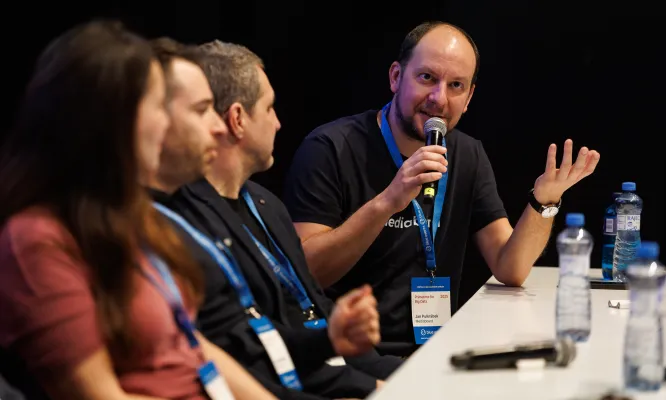
Prague, 21 September 2027 – Artificial intelligence in companies is moving beyond individual pilots and chatbots toward tools that are becoming part of data work, decision-making, and routine business processes. This brings a new set of questions: what data should AI be built on, how should its real value be measured, where can its outputs be trusted, and what does its rise mean for the work of analysts and data teams? These are precisely the topics that the 13th annual Primetime for Big Data conference will address on 26 November at the National Library of Technology in Prague.
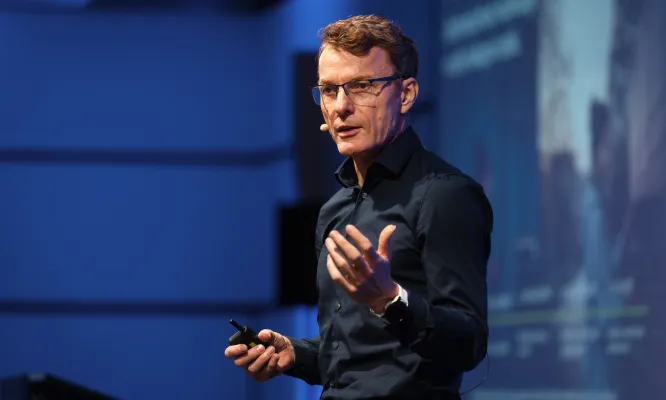
Prague, 16 September 2026 - How do you win over customers who have more choice than ever before? One of the strongest themes to emerge at the Retail in Detail: Happy Shopper conference was simplicity. Customers no longer pay only with money when they shop. They also pay with their time, attention, decision-making and uncertainty. Retailers that can consistently reduce this “mental cost” have a better chance of becoming their customers’ first choice.
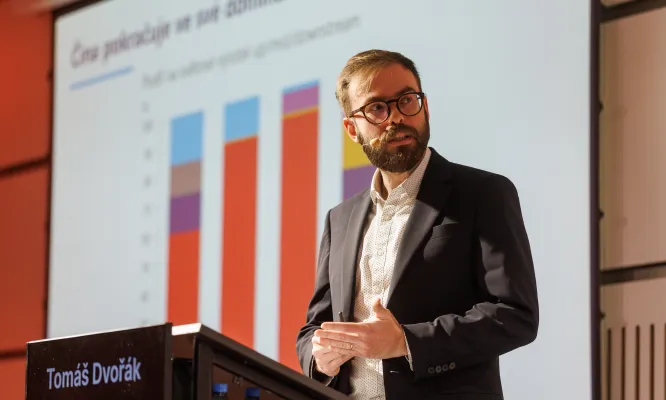
For the twelfth year, professionals from procurement, supply chain, and financial management will come together for the annual Procurement Forum conference. The event will take place on 4 November at KC City in Prague.
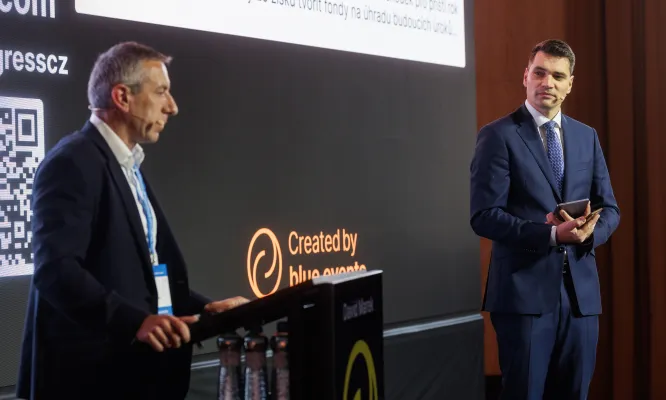
Prague, 13 May 2026 – How can businesses succeed in a world of growing geopolitical uncertainty, rapid technological change and an evolving labour market? These questions were at the heart of this year's CFO Congress, held at the Czech National Bank, where CFOs gathered to discuss the future of finance and business leadership. The conference featured leading economists, entrepreneurs and business leaders who shared their perspectives on the economic outlook, artificial intelligence, automation, leadership and the evolving role of the CFO.