CFO Congress 2026: Training the Czech Economy for a Marathon
Published Efficient Company Management 17. 5. 2026

Published Efficient Company Management 17. 5. 2026
Prague, 13 May 2026 – How can businesses succeed in a world of growing geopolitical uncertainty, rapid technological change and an evolving labour market? These questions were at the heart of this year's CFO Congress, held at the Czech National Bank, where CFOs gathered to discuss the future of finance and business leadership. The conference featured leading economists, entrepreneurs and business leaders who shared their perspectives on the economic outlook, artificial intelligence, automation, leadership and the evolving role of the CFO.
The Czech Economy Needs to Think Like a Marathon Runner
The conference opened with an economic outlook presented by economist David Marek from Deloitte, who argued that the Czech Republic's greatest competitive advantage lies in its exceptional ability to adapt and improvise. However, he stressed that long term prosperity requires more than simply reacting to change. It also depends on strengthening institutions, improving strategic planning and maintaining long term stability.
"If we want sustainable economic growth, we need to train for a marathon."
According toMarek, the Czech economy has successfully absorbed the initial inflationary shock caused by the conflict in the Middle East. Secondary effects, mainly through higher transportation, food and fertilizer costs, are expected to keep inflation in the 3 to 4% range, provided no further extraordinary events occur. On a positive note, thanks to economic growth in recent years, the Czech Republic has moved closer to the performance of Western European economies and currently stands at approximately 94% of the EU average.
People Are the Most Important Investment
Continuous learning emerged as one of the conference's central themes. Labour market analyst Tomáš Ervín Dombrovský from Alma Career Czechia emphasized that the future of the Czech labour market will increasingly depend on companies' ability to systematically develop their employees. He criticized the slowdown in government supported reskilling programmes and called on businesses to invest much more in upskilling and lifelong learning.
The importance of investing in people was further highlighted by Ondřej Vlček, co founder of cybersecurity startup AISLE. During an interview with Daniel Stach, he explained how the company built its global team.
"The best thing you can do is create an inspiring and motivating environment. People learn from one another, and that's the strongest motivator."
According to Vlček, software companies should think globally from day one.
When building AISLE, the company focused on attracting talented professionals with international experience who wanted to return to the Czech Republic and help build a company with a long term vision. Today, just a few months after its launch, AISLE is competing globally with some of the industry's biggest players, such as Anthropic.
Automation Is No Longer an Experiment but a Competitive Advantage
Jiří Machala, Group CFO at Rohlik Group, shared practical insights into the return on investment from automation. He presented the company's experience with large scale automation projects, including an investment of approximately €300 million in its new automated distribution centre in Munich.
Thanks to the implementation of the AutoStore system, Rohlik has expanded its product range, reduced inventory levels, shortened operational processes and increased the efficiency of its marketing investments. According to Machala, these investments currently achieve a payback period of just one to two years.
AI Is Transforming the Role of the CFO
Artificial intelligence and finance digitalization formed a major part of the conference programme. Speakers explored how AI is reshaping finance functions, the opportunities created by modern ERP systems and how organizations can move from retrospective reporting to real time financial management. A recurring message throughout the sessions was that CFOs are evolving from financial controllers into strategic business partners who base their decisions on high quality data and advanced technologies.
Without High Quality Feedback, Change Cannot Succeed
Psychologist Petr Beneš, co founder of JuiceUP, focused on leadership and highlighted feedback as one of the most effective tools for improving both performance and collaboration.
"Managers who meet regularly to exchange feedback implement change more effectively, understand the broader context and demonstrate a stronger sense of ownership."
Slovakia's Economy and Europe's Strategic Independence
The economic outlook for Slovakia became one of the key topics during the closing panel discussion featuring Lenka Škopová, CEO of Nestlé Czech Republic and Slovakia, Pavlína Maierová, Member of the Supervisory Board at Livesport, Martin Pisklák, Group CFO and Board Member at Kofola CzechoSlovakia, Pavel Hadrbolec, CFO & MoB at T Mobile Czech Republic and Slovak Telekom and Zdeněk Jurák, Group CFO and MoB of CSG.
Although Kofola enjoys a larger market share in Slovakia than in the Czech Republic, Martin Pisklák described the impact of Slovakia's sugar tax as devastating for the company.
Pavel Hadrbolec expressed optimism that the Slovak economy is beginning to recover.
Zdeněk Jurák stressed the importance of reducing Europe's dependence on imports from outside the European Union, concluding with a clear message:
"Let's not rely on anyone else."
The next edition of CFO Congress will take place on 12 March 2027 at the Czech National Bank in Prague.
Media Contact:
Tereza Ordonez
tereza.ordonez@blueevents.eu


There’s always something going on with us. Read more hot news from the world of Blue Events.
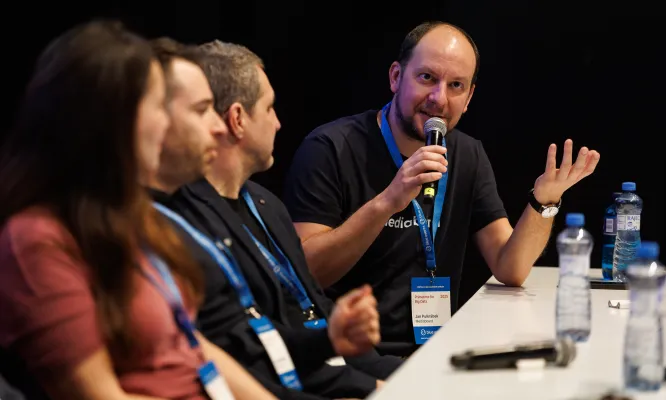
Prague, 21 September 2027 – Artificial intelligence in companies is moving beyond individual pilots and chatbots toward tools that are becoming part of data work, decision-making, and routine business processes. This brings a new set of questions: what data should AI be built on, how should its real value be measured, where can its outputs be trusted, and what does its rise mean for the work of analysts and data teams? These are precisely the topics that the 13th annual Primetime for Big Data conference will address on 26 November at the National Library of Technology in Prague.
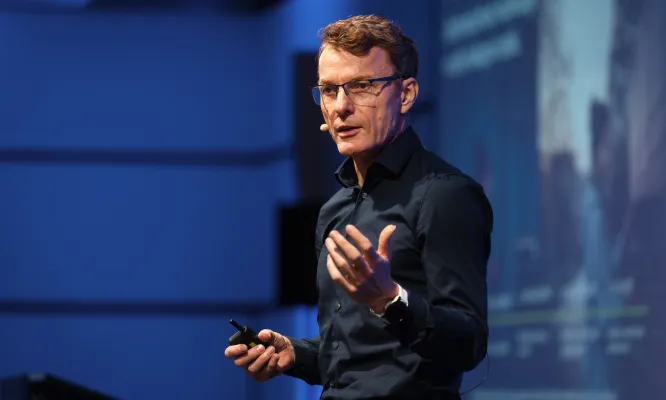
Prague, 16 September 2026 - How do you win over customers who have more choice than ever before? One of the strongest themes to emerge at the Retail in Detail: Happy Shopper conference was simplicity. Customers no longer pay only with money when they shop. They also pay with their time, attention, decision-making and uncertainty. Retailers that can consistently reduce this “mental cost” have a better chance of becoming their customers’ first choice.
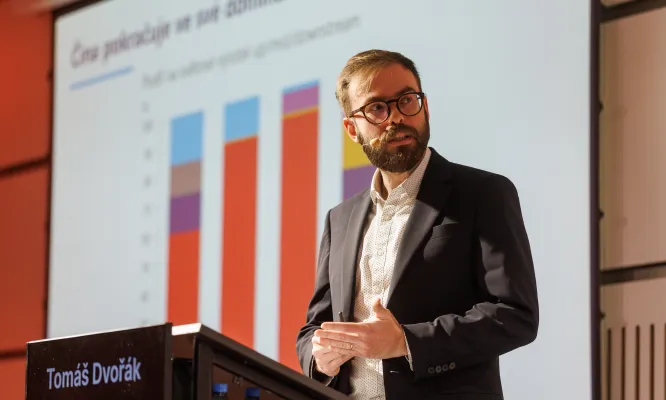
For the twelfth year, professionals from procurement, supply chain, and financial management will come together for the annual Procurement Forum conference. The event will take place on 4 November at KC City in Prague.
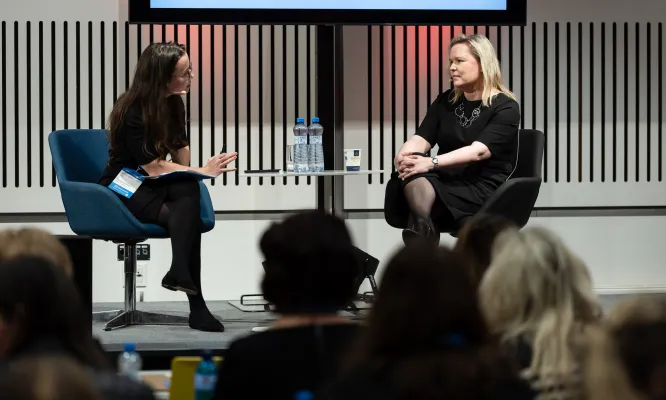
Prague, 28 January 2026 – The Czech labour market is undergoing a period of profound transformation. Companies are facing a growing shortage of skilled workers, changing employee expectations and increasing demands on leadership quality. How can organisations succeed when people, rather than products, are becoming their greatest competitive advantage? These questions were explored at Human Capital 2026, a conference that brought together leading experts from Czech and international companies.